Berlin is Germany’s largest retail market. With around 3.7 million inhabitants, a strongly growing population and one of the most international consumer structures in Europe, the German capital offers retailers, owners and investors a unique market breadth. Berlin is at the same time a polycentric city with several retail centres of equal rank – a feature that clearly distinguishes the location from other German metropolises. UNIQUE RETAIL advises nationwide with a specialised focus on retail and supports owners, investors and tenants in Berlin’s highstreet, secondary and centre locations.
Market data: as of July 2026
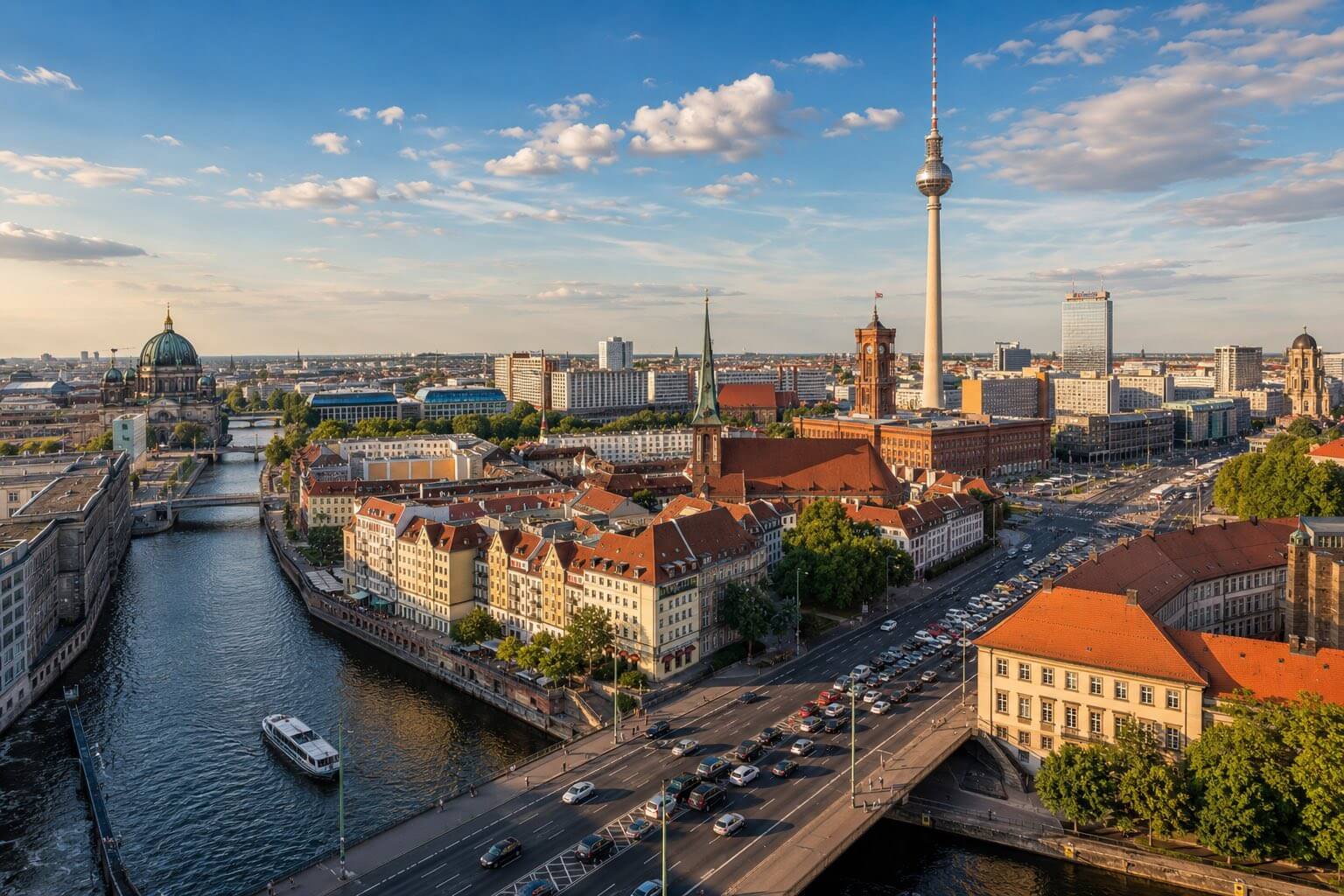
Berlin as a retail location in figures
Berlin’s retail market is Germany’s largest by volume. Annual turnover stands at around 18.7 billion euros, retail floor space at about 4.9 million square metres. Berlin thus clearly surpasses every other German city – Munich and Hamburg follow at around 11 billion euros. Retail-relevant purchasing power of Berliners stands at an index of 96.6, however, slightly below the national average (100). This apparent contradiction between market size and per-capita purchasing power is explained by sheer population size and the enormous catchment area: over 5.4 million people live in the wider Berlin surroundings and in Brandenburg.
Retail centrality stands at 106.6 and is thus above the national average. Berlin is particularly strong in the lead category fashion: fashion centrality of 157.5 shows that Berlin attracts disproportionately high fashion turnover from surroundings and tourism. The inner city concentrates around 651,000 square metres of retail floor (13.3 per cent) and generates around 2.58 billion euros of turnover. The polycentric structure of the city is reflected in a multitude of equally ranked secondary locations and district centres that form independent retail ecosystems in addition to the inner city.
Berlin’s prime highstreet locations
Berlin’s retail landscape consists of several clearly profiled axes that – unlike in most German cities – are not concentrated on a single inner city. The most important prime locations are the West axis (Kurfürstendamm, Tauentzienstraße) and the East axis (Friedrichstraße, Alexanderplatz). They are supplemented by strong-character district locations such as Hackescher Markt and Rosenthaler Straße.
Tauentzienstraße – the mass-market highstreet of the West
Tauentzienstraße is Berlin’s most frequented retail street. Between Wittenbergplatz and Breitscheidplatz, major multiples (H&M, Zara, Uniqlo, Massimo Dutti, Nike, Foot Locker, Apple), Kaufhaus des Westens (KaDeWe) and several concept-store spaces concentrate here. Tauentzien is Germany’s second-most expensive highstreet at around 285 euros per square metre per month – narrowly behind Düsseldorf’s Königsallee. After several years of increases, Berlin recorded a slight rental decline in the first quarter of 2026, while Düsseldorf gained ground and displaced the capital from second place.
Kurfürstendamm – the premium boulevard
Kurfürstendamm at about 3.5 kilometres length is one of Europe’s longest retail boulevards. At the eastern end (near Tauentzien) large multiples and international brands dominate, while the western part is increasingly shaped by upscale fashion houses, concept stores, automotive showrooms and gastronomy. Louis Vuitton, Bulgari, Dior, Cartier and Chanel are represented with prominent addresses. Rents vary strongly by section – absolute prime locations reach a level close to Tauentzien, while addresses further west are significantly cheaper.
Friedrichstraße – historic East highstreet in realignment
Friedrichstraße was once East Berlin’s central retail axis and remains, even after reunification, a significant inner-city location. After several disruptions – the departure of Q207 (Quartier 207 / Galeries Lafayette), restructurings of surrounding retail floors and the temporary car-free trial redesign – the street is in structural realignment. New usage concepts, mixed-use floors and the relocation of significant retailers to other Berlin locations characterise the current picture. For investors with a long-term horizon, Friedrichstraße offers opportunities in repositioning objects.
Alexanderplatz – the mass-market highstreet of the East
Alexanderplatz is with around 200,000 pedestrians per day one of the most frequented squares in Germany. Mass-market retailers such as Primark, Galeria, Media Markt and the Alexa centre concentrate around the Alex. Rents lie significantly below Tauentzien, but the catchment is complementary: while the West axis attracts more tourists and affluent West Berliners, the Alex serves the mass consumption of the East and rail-based commuters.
District locations – Hackescher Markt, Rosenthaler Straße, Bikini Berlin
Berlin’s retail landscape lives from its character-strong district locations. Hackescher Markt and the adjacent Rosenthaler Straße shape Berlin-Mitte with trendy brands, international concept stores and streetwear. Bikini Berlin at the Zoo positions itself as a concept mall with independent designers and pop-up formats. These locations are for many international brands the preferred Berlin entry standort and relevant to investors with a value-add horizon.
Prime rents Berlin 2026 – consolidation after years of increases
Berlin’s prime rents have risen over many years – in 2019 they already stood at around 280 euros per square metre. After the correction during the pandemic phase, values recovered to around 290 euros by 2025, before easing slightly to about 285 euros in the first quarter of 2026. Berlin thus remains one of Germany’s three most expensive retail metropolises – behind Munich at 340 euros and narrowly behind the rising Königsallee in Düsseldorf. The slight decline reflects less a market weakness than a realignment: retailers choose their locations more selectively, while landlords increasingly offer flexible lease structures.
Investment market and prime yields
Berlin’s investment market for retail properties benefits from international recognition and the growing population. Prime yields for highstreet properties in top locations stand in 2025/2026 at around 3.6 to 3.9 per cent and have – as in all German top-7 cities – normalised markedly in the wake of the interest-rate turn. Berlin is one of the few German locations where international capital regularly invests in retail properties. The polycentric structure offers a broad spectrum of asset classes: from core properties on Kurfürstendamm to value-add objects in emerging districts.
Purchasing power, catchment area and tourism
Berlin as a capital and international metropolis attracts a catchment area of around 5.4 million people. In addition to the population, tourism delivers an enormous share of demand: Berlin records over 30 million overnight stays per year – by far the highest tourist volume in Germany. The capital is thus Germany’s most important retail destination for international brands seeking market entry. Striking is the young, purchasing-strong and internationally shaped target audience – the share of 20 to 40-year-olds with high consumption readiness is clearly above the national average.
Current developments and projects
The Berlin market is shaped by several large-scale projects and repositionings:
- Friedrichstraße – comprehensive realignment, several mixed-use projects and usage discussions.
- KaDeWe / Signa – after the Signa insolvency and takeover by Central Group, repositioning of Kaufhaus des Westens; important impulse for the Tauentzien environment.
- Bikini Berlin – growing importance as a concept mall.
- City West – upgrade through several hoteliers and retail repositionings.
- Alexanderplatz development – ongoing high-rise projects will structurally change the environment in the coming years.
- District locations – upgrading of Rosenthaler Straße, Torstraße, Kastanienallee and other trend locations.
What this means for owners and investors
Berlin remains one of Europe’s most attractive retail locations – but the market is selective. For owners, the ability to adapt to modern retail concepts, mixed-use configurations and flexible lease structures is decisive. For investors, the polycentric structure offers an exceptionally broad spectrum from core highstreet objects, through value-add opportunities in district locations, to opportunistic repositioning projects. UNIQUE RETAIL advises owners and investors in Berlin with reliable market data and an active retailer network.
UNIQUE RETAIL for Berlin
You own, develop or are looking for retail space in Berlin? You are evaluating a retail property investment or assessing a portfolio? Talk to us – we will provide an independent assessment of market value, lettability and repositioning potential.
Request a free initial consultation →
References & further analysis
Frequently asked questions on retail properties in Berlin
How high are the prime rents in Berlin?
The prime rent on Tauentzienstraße stands in the first quarter of 2026 at around 285 euros per square metre per month (net cold). Berlin is thus one of Germany’s three most expensive retail locations, after Munich and Düsseldorf. Actually agreed rents vary strongly by location, size and lease term.
Which are the most important prime locations in Berlin?
Berlin’s central highstreet locations include Tauentzienstraße (mass-market highstreet with KaDeWe), Kurfürstendamm (premium boulevard), Friedrichstraße (historic East highstreet in realignment) and Alexanderplatz (mass-market highstreet East). They are supplemented by district locations such as Hackescher Markt, Rosenthaler Straße and Bikini Berlin.
How large is Berlin’s retail market?
Berlin is with around 18.7 billion euros of annual turnover and 4.9 million square metres of retail floor Germany’s largest retail market. Retail centrality of 106.6 and the high fashion centrality of 157.5 show the appeal from surroundings and tourism.
How high is purchasing power in Berlin?
Retail-relevant purchasing power in Berlin stands at an index of 96.6, slightly below the national average. Owing to the sheer population size and the large catchment area of around 5.4 million people, Berlin is nevertheless Germany’s largest retail location.
What role does tourism play for Berlin retail?
Berlin records over 30 million overnight stays per year – the highest volume of any German city. Berlin’s international importance attracts retailers who choose the capital as their German market-entry location. For many brands, Berlin is the preferred first store in Germany.